
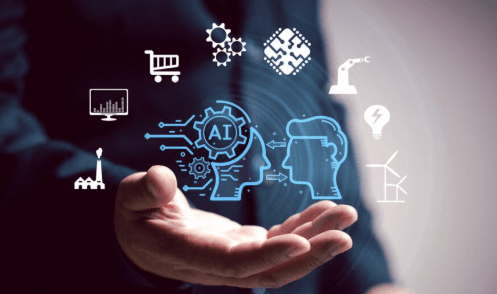
The discussion reframes intelligence as a collaborative architecture, not a contest. Humans offer context, judgment, and interpretive meaning, while machines extend reach, speed, and pattern discovery. The inquiry rests on how creativity, ethics, and governance shape shared reasoning. Evaluating intelligence becomes a study of collaboration across disciplines, with transparent benchmarks and accountable alignment guiding deployment. The implications for practice lie in a disciplined dialogue that may redefine problem framing—and the next move rests with those who set the terms.
What Counts as Intelligence for Humans and Machines
What counts as intelligence varies with the observer and the criteria applied. Across humans and machines, definitions hinge on problem-solving, adaptability, and autonomy, yet diverge in measurement and context. This analytic view assesses ethics implications, cognitive load, and experiential nuance, noting that intuition, creativity, and learning strategies resist simple quantification. An interdisciplinary lens reveals convergences without erasing distinctive operational pressures. Freedom resides in transparent criteria and reflexive critique.
How Humans Complement Machines in Real Insight Work
Humans contribute directly to real insight work by supplying context, judgment, and interpretive frameworks that machines alone cannot generate.
In practice, collaboration unfolds as calibrated feedback loops: humans steer problem framing, validate patterns, and assign meaning, while machines offer scale, speed, and probed correlations.
This symmetry reflects human augmentation and cultivated machine intuition within disciplined, interdisciplinary inquiry that prizes freedom and responsibility.
Evaluating Intelligence Through Creativity, Context, and Collaboration
The analysis traces origins of creativity, contrasts machine intuition with human nuance, and emphasizes shared context as a scaffolding for collaborative problem solving, where disciplined dialogue and interdisciplinary scrutiny illuminate measurable and emergent intelligence beyond standardized tests.
Future Scenarios: Shared Reasoning That Elevates Both Sides
Anticipated futures lie at the intersection of human insight and machine inference, where shared reasoning processes can elevate both sides through structured collaboration, rigorous validation, and transparent benchmarks.
This scenario emphasizes intuitive computation and collaborative problem solving, enabling adaptive governance of uncertainty, cross-disciplinary evaluation, and ethical alignment.
Detachment clarifies tradeoffs, fosters scalable methodologies, and invites disciplined experimentation across cognitive and computational boundaries.
See also: Human-AI Collaboration in the Workplace
Frequently Asked Questions
Can Machines Ever Possess Genuine Common Sense Reasoning?
The answer: machines cannot truly possess genuine common sense, though they simulate it through sophisticated patterns. In machine reasoning, contextual grounding remains algorithmic, analytic, and bounded, challenging interdisciplinary claims of freedom without invoking human-like intuitive understanding or shared lived experience.
How Do Emotions Influence Human Intuition in Decision-Making?
Emotions shape human intuition by coloring information processing with emotional bias, guiding gut instincts while also enabling rapid pattern recognition. An interdisciplinary view notes trade-offs between speed and deliberation, advocating freedom to question assumptions and test intuitive judgments.
Will AI Creativity Ever Surpass Human Originality Completely?
AI creativity may not fully surpass human originality; instead, it converges through creative collaboration, challenging assumptions about agency. The analysis emphasizes AI ethics, interdisciplinary inquiry, and freedom-focused discourse shaping evolving definitions of originality and value.
What Safeguards Ensure Fair Collaboration Between Humans and Machines?
A lighthouse warning keepers: clear collaboration requires policy alignment and bias mitigation, ensuring transparent roles. Data shows diverse teams outperform, yet risks persist. The balance rests on shared norms, interdisciplinary scrutiny, and safeguards empowering human freedom within responsible AI use.
How Should Accountability Be Shared in Hybrid Intelligence Outcomes?
Accountability sharing emerges through clearly defined responsibilities and transparent processes, ensuring traceable outcomes. In hybrid governance, responsibilities are allocated across humans and systems, promoting reflective oversight, interdisciplinary evaluation, and freedoms-oriented safeguards that balance innovation with ethical accountability.
Conclusion
In this partnership, intelligence becomes a bridge rather than a battleground. Humans plant seeds of context, ethics, and meaning; machines water them with speed, pattern-finding, and reach. The collaboration resembles a harbor and a tide: the harbor—stable judgment, shared goals—grounds the flux of data, while the tide reshapes shores through novel correlations. When symphony and scaffolding align, insight travels unseen currents to shore, where reflective practice and scalable reasoning illuminate lasting, responsible advances.
